Thursday, 29 June 2023

 THE ABC OF FAMILY HISTORY

As many of you may know in a former life (what now seems a lifetime ago) I managed and investigated allegations made against members of staff, in my employer organisation, pursuant to the NSW Ombudsman's Act.  Immediately pre-retirement I managed a team of investigators and my advice to them in conducting an investigation was to follow these rules.

Accept Nothing

Believe Nothing and,

Check everything.

I was recently part of a group discussing tips and tricks to conduct Family History Research and it occurred to me that these rules could apply to these "investigations"  as well and could be taken a little further.  What follows is my A - Z of conducting Family History Investigations

A - Accept all information you are given with an open and inquiring mind

B - Believe nothing

C - Check everything and Cite your sources and don't forget about what is written on headstones in cemeteries 

D - Document every step you take in your research. Your Direct Line is a good starting place as it shows  descendants  traced through persons who are directly related to one another as a child and parent

E - periodically Evaluate your methodology and your evidence will be your proof. Enjoying your research is key.

F - Find people who share your interest in Family History. One way to do this is to join a local Family History Society. I like to use Family Group Sheets which is a  form that presents genealogical information about a nuclear family 

G - Grow your tree - keep adding information to your family tree as you go along.  Once the process is started it is ongoing because families are dynamic, transitional and flexible. Go digital

H- Help others in their research as they may have information that will help you

I - the Internet is a valuable tool but don't believe everything you find without going back to ABC

J- Jump in and just get started you never know where it will lead you

K - Keep your focus. Although you will go off on different tangents along the way (and this is something I do and it can sometimes lead to amazing discoveries) it is important to have a plan for your investigations.

L - Look for alternative sources of information and don't forget the local and regional libraries hold great repositories of information

M - Make time for your research and think about the use of mind maps. It is also important to remember the maternal line which is the line of descent traced from the mother's side

N - Networking both online (using social media for instance) and in person is a great help in your research

O - Oral history can be provided  by older relatives and you never know when opportunities will present themselves

P - Plan your research - think about what you know and what you would like to find out.  

Q -  Question everything - ask why, when, who, where, and how.  Plan some quiet time for review

R - Read about the general and local history of the time you are researching.  Be respectful of your fellow researchers 

S - Sometimes work Sideways - if you cannot find the information on a particular ancestor look at siblings or siblings of parents

T- Thank people who provide you with information.  Whilst wills can provide important information remember that people were often described as testate - meaning they died without leaving a proper will

U - Understand new things - for instance, DNA technology and AI are making major inroads into family history research

V - Verify your sources of information.  If you find something on a website for instance by accessing another researcher's family tree don't accept that it is accurate until you have checked and verified it.

W - Write your story and the story of your ancestors. Wills can provide important family information

X - Xylographer - this is a term used for a person who used and made wooden blocks used in printing illustrations. Sometimes you will come across words, phrases, occupations, diseases, and causes of death that are no longer in common use and this takes some research

Y - interest Younger family members in the information you are compiling

Z - use Zoom in your research to connect to relatives and other researchers


Happy Researching

Wednesday, 28 June 2023

John Jennings (my great-grandfather’s brother)

Curator of Sydney Cricket Ground 1899-1911


John Jennings was born in Arbut, Galway, Ireland in about 1863.  He was the third child of Thomas (1837 – 1917)and Bridget Jennings nee Conroy (1839-1908).  As a one-year-old, he travelled to Australia with his parents, and two older brothers Jeremiah (1858- 1944), and William (1861-1931)  on board the vessel Sirocco, arriving in Australia on 28/1/1864.


By 1865 convicts were not being transported to Australia so the colony was experiencing a labour shortage.  There had been an influx of immigrants during the 1850s when gold had been discovered and the lure of making a fortune led to many making the decision to make the voyage to Australia. The journey to Australia was arduous, taking up to four months or more. Because of poor hygiene and cramped living conditions, the death rate was high.  One in 10 adults and one in 5 children were known to perish.  Storms presented a particular problem; when the crew “battened down the hatches” it meant the passengers were confined to their quarters.  For those in cabins this was bad enough for those in steerage it would have been intolerable.  They were confined to their quarters with all the other passengers, in total darkness, with no ventilation and limited toilet facilities.  Seasickness was rife at these times because of the boat pitching in the storm.  


After a short period of quarantine, the family would have been “released” into the care of Bridget Tiernan.  Bridget was Thomas’s older sister who had travelled to the Colony with her sibling Margaret on board the Hilton in 1855.  Bridget had sponsored the family’s migration to Australia allowing them to travel as Assisted Passengers during the voyage.


Initially, the family lived in Pitt Row, Sandhills (which was the area around Nobbys) with Bridget and her family. Sometime later the family moved to the Adamstown area. 


Once in the Colony, the family had four more children Thomas (1865 – 1866), Patrick (1867-1940), Mary (1869-1869) and Michael William (1870 – 1943).


Whilst not much is known about his early life in Newcastle, John’s father Thomas had various periods of incarceration, generally for offences relating to alcohol use, with sentences ranging from a day to a week.  Thomas was always in work however but I imagine his childhood would not have been easy.


On 12/01/1889 at the age of 25 John married Casina Elizabeth Hickens (Kickens)  (1861-1919 )in Sydney. Casina had a troubled background have spent several years from the age of 6 at the Randwick Asylum for Destitute Children following her father’s desertion. In 1875 at the age of 13, she was apprenticed to Mrs G Berne of Bega. This was the year that Mr Berne died under mysterious circumstances. Returning on horseback from an auction, carrying 500 pounds his body was washed away in the Bega flood. The cash was never located but an empty money belt and the remains of a foot in a riding boot were found weeks later. The local bootmaker was said to have identified the boot as Mr Berne’s.  The Bernes’  eldest daughter Dagmar was the first woman to enrol in medicine in Australia at the University of Sydney in 1885.  


In 1899 John Jennings or Jack as he was known took on the position of caretaker of the Sydney Cricket Ground. The couple had no children of their own and lived on-site at the SCG. Family stories and research indicates many of their nieces and nephews visited them there. John held the position till his untimely and unexpected death from bowel cancer on 30/09/1911.


In an article on the SCG “From Horses to Computers – Curators of the SCG” the SCG wicket was credited as one of the best batting strips in the world under John Jennings’ curatorship. 

This was largely due to his introducing covers for the wicket and levelling the rise that had developed in the Randwick end of the wicket area due to years of constant topdressing. 

Casina passed away in Sydney on 19/03/1919. At this time she was residing with a niece at Florence Villa, Cameron Street, Rockdale NSW.


Tuesday, 11 April 2023


     A TRIP TO HOSPITAL


I can still remember as a child being admitted to hospital to have my tonsils and adenoids removed. I was about four years old at the time and the memory is a very vivid one.

In those days it was it was a very different scenario to an admission for the same procedure today. In today’s scenario you would be admitted today and home tomorrow. Back then you were admitted for four or five days. It was also not encouraged for parents to visit whilst you were a patient as it is today when parents stay with their child around the clock.

I don’t recall having any preparation for my visit to the Mater. On the appointed morning I was taken by my parents to the hospital. Dad would not have had a car back then so I am not really sure how we got there. What I do remember was being dressed in my pyjamas and dressing gown. My dressing gown was pale green chenille with yellow and pink flowers on the bottom. Mum tells me that she made this for me by cutting down one of her old dressing gowns as was the practice at the time.

I remember waiting in the waiting room where there was a very large grandfather type clock which I found fascinating. My name was called and I was told to go with the nice lady. Being the good little girl I was, (back then) off I went without a backward glance to where Mum and Dad were waiting. They told me however that they would be waiting right there for me.
.
I remember being on a trolley and being wheeled into theatre (although I did not know this was what was happening at the time) and a doctor asking me what my favourite thing was and I told him fairies. He asked me what colour fairies I liked and I told him pink and purple. He then told me he was going to help me go to sleep and I would dream about the fairies. There was no explanation as there would be today about a mask being put over my face. I told him I was not sleepy and he said I would go to sleep very soon because he was magic. I remember the mask being placed over my face and floating away. I really do think I dreamt about the fairies.


I woke up in a strange bed with someone else pyjamas on and I felt like someone had lit a fire in my throat. I was not allowed out of bed for the next few days and was fed on jelly, junket and foul tasting broth.

I remember trying to ask were was my mum and being told not to talk. Now those of you who know me well will realise that this was a massive challenge.

After a few days I was finally told I would be going home. Now I expected to be taken back to the room with the grandfather clock but I was taken in a wheelchair to a waiting ambulance to be taken home. There were two or three other passengers sitting in the back of the ambulance and when they had been dropped off the driver asked me if I wanted to hear the siren. Well it had all been worth it as we came along the streets near my home with the siren ringing. I say ringing because it was a bell clanging as we approached home.

Convalescence followed for a few weeks after this and I remember home made jelly and mum’s home made ice cream (Oh what a treat).


Monday, 10 April 2023


Further history of the Jennings Family

It has been some time since I posted anything to the site I think mainly due to the surgery to repair my arthritic hip and the complications which have ensued in the recovery phase. I am hoping to amend that and continue to provide updates on my family history research. Today's offering is about my great grandfather's brother Jeremiah Jennings. Jeremiah was an interesting character, he worked as a coal miner, served on the Adamstown Municipal Council as an alderman and was Mayor from 1896 -1897.

Jeremiah Jennings


Jeremiah Jennings was born in Arbut, Galway, Ireland in about 1858.  He was the oldest child of Thomas and Bridget Jennings.  As  an eight-year-old he travelled to Australia with his parents and two younger brothers on board the vessel Sirocco, arriving in 28/1/1864.


When Jeremiah set sail for Australia  he was accompanied by his parents and his two younger brothers, William (1861-1931) and John (1863-1911).  Jeremiah’s father Thomas, had a sister Bridget, residing in the Colony who sponsored the family’s migration allowing them to travel as Assisted Passengers on the voyage.


Once in the Colony the family had four more children Thomas (1865 – 1866), Patrick (1867-1940), Mary (1869-1869) and Michael William (1870 – 1943).


At the age of 19, on 3rd November 1877,  Jeremiah married Elizabeth Hamilton (nee Gore) (who was 26)at St Mary’s Roman Catholic Church in Newcastle.   Elizabeth was born on 14th December 1851.  She was the daughter of Arthur Herbert Gore (1818 – 1878 ) and Mary Anne Hodstone (1833 – 1868).  Following her mother’s death in 1868, two of Elizabeth’s younger siblings, William(6 years)and John Thomas (4 years) were given over to the care to the Randwick Children’s Asylum.  Elizabeth’s father it would appear was in gaol at the time.


Elizabeth had been married previously to Richard Hamilton (1848-1874) and brought two children to the relationship.   John “Dinny” Hamilton (1872-1955),  - married Louisa Wilson and Helena Miler.  Dinny was a member of Adamstown Rosebuds Soccer Club for 66 years and was known in the Club as the "Grand Old Man". Marion May “Cissy” Hamilton (1874 – 1947). Married Albert Bramley 

Together Elizabeth and Jeremiah had 10 children.

Margaret M - 1878 - 1915 married John Holloway

Alice Maude 1880 - 1946 married William S Stone

Frederick James 1881- 1971 married Anastasia Flavey

Florence Bridget 1883- 1963 married Thomas Nolan - their grandson Vincent Farrell was killed whilst a prisoner of war in World War 11

Elizabeth Catherine 1887 - 1960 married Richard James Cox

William Patrick 1888 - 1977 married Margaret McKee (served NSW Police for 38 years rising to the rank of Inspector)

Christina Casina 1890 - 1891

Jeremiah A 1892 - 1952 married Lillian McElroy ( known as Bull Jennings and had a promising soccer career but ub 1918 suffered a bullet wound to the leg. He was the leading groundsman at Jubilee Oval Kograh)

Casina Ellen 1894 -1949 married Henry Turnbull

In January 1880 Jeremiah was sentenced to one month’s imprisonment in Maitland Goal for assault at Adamstown – Newcastle Morning Herald and Miners Advocate, Friday 16th January 1880.


In 1894 Jeremiah was involved in a strange case of stone throwing. It would appear a neighbour’s son had been throwing stones at his home for some weeks.  When the identity of the stone thrower was discovered the matter was brought before he courts and the culprit found guilty and chose gaol over the paying the fines imposed.  Newcastle Morning Herald and Miners' Advocate (NSW : 1876 - 1954) Wednesday 11th April 1894 page 7 


Jeremiah worked as a coal miner. In 1898 he was overcome by carbon monoxide whilst assisting in the recovery of 15 bodies at the Dudley Pit. The newspaper report states that he was bought to the surface in an unconscious condition and had to be attended by several doctors.  Elizabeth was present at the pithead and also had to be treated by doctors as she went into hysterics. Newcastle Morning Herald and Miners Advocate 


In 1903 the miner’s lodge organised a benefit concert for him and the family, which had a very successful result.  At that time Jeremiah had injured his back and had been unable to work for over 12 months.  Newcastle Morning Herald and Miners Advocate, Thursday 25th January 1900


He served several terms as and Alderman and Mayor of the Adamstown Council.  He was also active on the management of the Adamstown School of Arts as well as an active interest in Mining Lodges. Jeremiah served as Mayor of Adamstown Municipal Council from 11/2/1896 – 8/2/1897


He was the Manager of the Adamstown Rosebuds Soccer Club, in particular at the time of the winning  1909 State Cup team.  Two of his sons William and Arthur, were members of the team and his stepson, Denis Hamilton was the Secretary of the Club. 


Jeremiah and Elizabeth resided in Adamstown and had a small cottage on the shores of Black Ned’s Bay at Swansea. 


The latter part of their life was spent in the home of their daughter Cassie and her husband, Harry Turnbull, at Cardiff.


Elizabeth died on 12th December 1942. At the time of her death the Newcastle Herald reported that she left 125 direct descendants – 13(?) children, 61 grandchildren, 50 great grandchildren and 1 great, great grandchild.  Jeremiah died on 16th May 1947.  They are both buried in Sandgate Cemetery


Sunday, 25 December 2022


CHRISTMAS MEMORIES


I always remember Christmas as a magical time. Back then we would have a certain build up towards Christmas Day.

School would finish a week or ten days before the anticipated event. In those ten days we would “harvest” and decorate the Christmas tree. There was no such thing as an artificial tree for many years in our family.  Dad would often bring the tree home and we would wait till the next morning to begin decorating. We would make paper chains. There were the decorations we had made at school in craft, we would make silver stars and these were added to a few precious decorations that were bought out to ornament the tree. I recall that the tree would often look a little worse for wear before we would start but by the time we had finished it stood in pride of place in the lounge room in all its magnificence.


Then there would be the visit to Santa and the Santa photo. Mum would deck us out in our Sunday best and take us into either Winns or David Jones where we would line up to take our turn at talking to Santa to ask for our desired gift. Mine was alway a book of some kind or a doll when I was younger. I recall that Santa would never promise what he was not able to deliver. He would always say something like “I will do my best but you must remember that Santa has lots of boys and girls to visit and lots of boys and girls are wanting whatever” he would then say that he would leave something special for us if he could not give what we asked for, thus adding to the anticipation.


Then there would be the children’s Christmas Parties, for us, hosted by Dad’s workplace and the local R S L. Hundreds of kids and their parents would congregate in a local hall. There would be lots of party food, party pies and sausage rolls, sandwiches, cakes and lollies. Always make-up cordial to drink and cups of tea for the mothers. Santa would arrive  much to excitement of the waiting kids. Silence would descend so we could hear our names being called. Santa would call our names in age groups and present us with an age appropriate gift. All the 10 year old girls for example would receive the same present. I remember when I was about 11 receiving a beach towel which I though was pretty special to have my very own towel different from the rest of the family.


Then there was the Christmas house clean. I do not remember my childhood home being anything other that meticulously clean and tidy when I was a kid. But because Christmas was approaching the house would be cleaned from top to bottom and we would all have a part to play in this ritual. There was no reluctance from myself or any of my siblings as this was an important part of the Christmas preparations.


There was also the yearly visit to David Street, Georgetown. Now this was a magical evening. Dressed in our pyjamas and brunch coats we would set out as a family to walk the short distance to David Street where every house in the street was decorated and lit by fairy lights. I longed for something like that to happen in our street but of course it never did. We would often see school friends on similar family outings and after checking out each house we would make our way home discussing the merits or otherwise of each display. We would always all agree however that it was always better that last year.


We would go to bed early on Christmas Eve. If we had daylight savings back then I am sure it would have still been daylight as we would go to bed early in any case. I remember I would be in bed feigning sleep and telling myself I would stay awake all night see Santa. I would soon be asleep and when morning dawned we would gather around the tree as a family to open our gifts. I don’t recall if Mum and Dad got presents as it seemed to be all about us five kids. After this off we would go to Mass where we would be keen to tell any friends present what Santa had brought us.


When we got home a quick breakfast and then Mum would begin lunch preparations. Always a hot lunch, baked chicken and vegetables followed by Plum pudding and custard. The plum pudding would always have threepence and sixpences in it and as a little kid I was always terrified that I would swallow one and be rushed off to hospital. Oh how carefully I would chew that pudding.


My Grandfather would always join us for lunch and this always made it a special occasion. As a very young child I used to worry about Pop as he lived alone and I did not like the thought that he would be lonely.


After lunch we would all help with the dishes and the clean up and we would be sent outside to play with our Christmas gifts while the adults rested. I remember I would generally receive a book so I never objected to this arrangement as it would give me a chance to get lost in a story. It seemed always to be a sweltering day except for the Christmas that I got a bicycle. That year it rained torrentially for two days and I had to wait till the day after Boxing day to try out the longed for bicycle.


Wednesday, 23 November 2022

 The Gehrig Family  

Johann Linus Gehrig on 11/11/1837, was the son of Franz Gehrig and Anna Maria nee Frenzel. He was born in the village of Neudorf, Germany which was a few kilometres north of the town of Eltville on the Rhine. 

At 12 years of age his family emigrated to Australia on the Parland, the second ship to bring assisted German vinedressers to New South Wales after regulation in 1847 allowed foreigners to be assisted for specific purposes. The Scheme ran until 1856 and more than 800 families were introduced as vinedressers or coopers to work for established landowners for a 2 year period. The regulations required that a man be married , with or without children. He had to bring a special form signed by the parish priest or mayor to testify age, health, character and credentials. The Certificates were in German on one side and English on the other and were examined by the Immigration Board in Sydney on arrival. If there were problems, payment of bounty to the landowner or the recruiting agent was withheld pending explanations. 

John’s father Franz Gehrig, died within just a year of arriving in Australia, thus he was cared for by his mother Anna Maria and his two step brothers, William and Joseph Frenzel. 

in 1860 John married Elizabeth Fischer and together they had 14 children. Mary Anne Josephine Sophie was my great grandmother.

Not much is known about Elizabeth’s origins. Family story indicates that she was not treated well by her father in Germany and she came to Australia with friends of the family. On a promise to send her home after a year, but the family fell on hard times and Elizabeth never saw parents again. She was approx 16 years of age when she married John. 

In 1862 John was naturalised at the age of 24, his place of residence was the Allyn River, Dungog. This was probably the time when he wanted to buy land of his own, as naturalisation was a prerequisite for land ownership. John Gehrig passed away in 1914 and Elizabeth in 1923 


Sunday, 20 November 2022


MY DAD      

Today is the 11th anniversary of my Dad's death. On 21st November 2011 he passed away in Hunter Valley Private Hospital. The gerontologist told Dad a few weeks earlier that he could not return home to his beloved wife and home. He was not happy about this advice. He objected loudly and strongly. Much work was done to find a suitable placement for him and this came through on the afternoon that he died. His last wish not to go into care was circumvented by his passing. 

Dad was and is my hero….sadly he is no longer with me physically but he is there with me in spirit all of the time. I hear his voice often urging me through difficulties and celebrating achievements. Dad lived a life blessed by the love of a faithful, loving wife and loving children.

Dad’s life as a kid was filled with much sadness but he told me had many happy memories from his childhood. He once won a fancy dress competition when his mother made him a costume “stop here for trams” It was the depression and there was much money so his Mum dressed him as a tram/bus stop. He could not remember what he won and said it was probably just a certificate and he felt very proud to have won and very proud of his mum for making his prize-winning costume.

He remembers his school days at the Catholic schools at Broadmeadow and Adamstown as happy times as he had a thirst for learning. He instilled this in me as the years passed. He remembers receiving the sacraments and he told me once his First Communion was a memory that held a special place for him and filled his necessitous life with great joy.

As there was never much money, accommodation was by necessity shared and often overcrowded. He told the story of living in Lambton with his Mum and Dad, four siblings, Aunt and Uncle and their four kids. All in a small two-bedroom house. I was talking to one of these cousins (R) and he told the story of getting knocked by a car at the front of the house (they played outside in all-weather as there was not much room in the house). I asked R if he got into trouble and if he went to hospital. His response was he was not the one who got into trouble but his older brother (J) and Dad were scolded for not keeping an eye on him. As for hospital he said, such were the times, this was not even a remote option. He said he was allowed to stay inside for the rest of the day and this was a rare treat. Dad maintained a strong and loving friendship with these men through his life.

One of his enduring memories was being sent outside when his mother was giving birth to the youngest of  his sisters. Dad knew that something of import was happening so he stood on a box outside the bedroom window and watched the whole event unfold. He said he, nor his actions were ever discovered. He said however, when misdemeanours were discovered discipline was hard and physical. He bore no ill-will towards his parents for this as that was how parenting happened.

He always said he remembers his childhood as a happy time despite the hardships and difficulties. The family moved often and this is something that I could never quite understand. When Dad became too infirm to drive I would often take him out for a drive in my car. One particular day we were in Broadmeadow and he was pointing houses where he had lived. After the fourth or fifth house (mostly along Brunker Road) I asked why they had moved so regularly and quite matter of factly his response was “The old man was not good at paying the rent”.

Sadly Dad’s mother, my grandmother, died when Dad was just 12 years old.   Dad’s youngest sister Maureen, was just a tiny baby. Grandmother had pernicious anaemia and there was no cure or treatment. He recalled however, his aunties boiling up masses of liver (lambs fry) and his mum drinking the resultant liquid. I cannot even imagine doing this. Dad, being the eldest of the five children, gave up school at this time to care for his younger siblings. He can remember following the horse-drawn hearse through the streets of Broadmeadow to make the train journey to Sandgate Cemetery. The vision of the black plumes on the horse’s heads remained with Dad throughout his 87 years.

The family were living in Lambton at the time of his mother’s untimely death but soon after moved to back to Broadmeadow. The lived opposite the Premier Hotel where Hunter Pain Clinic now stands ( a place I visit often). Back in Dad’s day it was a Pool Hall and they lived on the top floor. My Grandfather’s job was to manage the pool hall. I suspect the move back to Broadmeadow was so Pop could be near his sister who helped with the kids when she could. Ultimately however, Dad was not able to care for his siblings ( the youngest being just a few months old) and they were placed in care. No foster care in those days…..sadly the siblings were separated the girls going to Monte Pio in Maitland and Uncle Bill to Murray Dwyer at Mayfield West. This decision caused difficulties in the family for many years. The female siblings felt a great sense of betrayal and bitterness towards their father and Aunty for not being able to provide them. 
Dad did not go into care because by this time he was almost 14 and went to work. He worked for the Railways.  When WW11 broke out he wanted to join the Army but the railways were a “protected” industry. Dad decided that if he could not join the army he would stop going to work. His boss came around to the house and asked him if there was something wrong and Dad told him he wanted to join the Army so his boss signed the forms and Dad joined up.
He served in Borneo and New Guinea and whilst he was home on leave he met Mum at his Aunty’s home (where she was working as a dressmaker) and they married at the end of the war. 

I read somewhere recently that dying well is simply an extension of living well. My Dad  died as he lived surrounded by those who loved him. He gently slipped away with Mum and his kids, some of his grandkids and great grandchildren by his side. He had “waited” I believe several hours for Mum to be with him when he made this last journey. His passing was as gentle as he was and he quietly went to meet his God. He was asleep, his breathing slowed and he was gone. Then the realisation that life would not be the same again became apparent. Just as they did everything together, Mum was there to hold his hand and prayerfully guide his passing.

I miss my Dad. His story goes on in his five children, ten grandchildren, twenty great grand children and two great great grandchildren. Something will always remind me that Dad is close and watching over me.


Tuesday, 1 November 2022

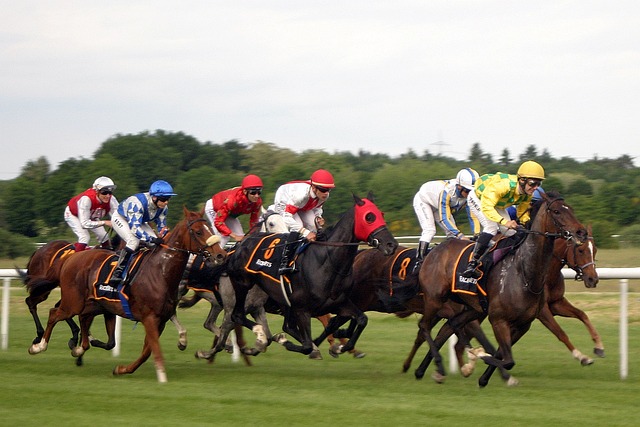
 THE RACE THAT STOPS A NATION

I remember when I was in Year 4 at Primary school the Melbourne Cup  was televised for the first time. The year was 1960. It was the year that Graham Thorne was kidnapped in Sydney in a bid to extort money from his parents who had won the Opera House lottery. The Olympic Games had been held in Rome. Elvis Presley, Bill Haley and the Comets and Jonny O’Keefe were being played on the radio.


In those days television was available for one month’s free trial. Now this was a good sales ploy because once television was brought into a home it very rarely ever returned to where it came from. Prior to this any television watching had occurred by looking through shop windows. Television had been introduced into Australia in 1956 and it is estimated that by 1960 1/3 of all homes in Sydney and Melbourne had a television set.


I come from a long line of punters and a search of Trove will show many examples of my Uncles and cousins being fined for illegally taking bets. In keeping with this family tradition Dad decided he would like to have television for the Melbourne Cup – the race that stopped a nation. He said however and he was adamant, that the television would be returned to Churchills from where he and Mum bought it when the month free trial was finished. To receive a signal you needed a mast and antenna to be fitted to the roof of the house. There was great excitement a couple of days before the running of the Cup when we came home from school to see the workmen erecting the aerial. We knew then that it was real and television was coming to Baird Street, the street on which we lived.


The day of the Cup arrived and Dad did not go to work in anticipation of the big event. Hi Jinx was the winner, a brown New Zealand bred mare at the odds of fifty to one. Hi Jinx was the sentimental favourite and my dad had placed a bet on this particular horse. Well because of that bet the television never did go back. Dad said that if he had lost his bet there would be no more television in our house. How lucky he was and more than that how lucky were we.


1960 was the 100th Melbourne Cup and the great thoroughbred Tulloch run in the Melbourne Cup that year and was unplaced (the only time in his racing career).


Those of you that have ever discussed Melbourne Cup with me know that I always have a bet on the Cup and I always have a bet on any mare in the field. Only nine mares have won the cup since Hi Jinx – Makybe Diva winning three times in a row. So I have had a couple of wins. People have assumed that this betting pattern, on my part, is because of my feminist leanings little do they know of this story. I always also have a bet on any grey horse in the Cup and sometimes you do find a grey mare……but my betting wins are few and far between.


Television was only turned on at particular times during the day in our household and if we had misbehaved television privileges were denied. We were not allowed to watch television after a certain time and this was very early on school nights and then only after our homework had been completed. 


I remember Hi Jinx fondly and I am thankful for her win as it enabled us to keep the “television.


Friday, 14 October 2022


                       Beauty Rituals

I saw a post on Facebook earlier in the week that reminded me of hairstyles when I was a kid. I have always had short hair. For whatever reason I have never been able to grow my hair to any length. I am blessed with really thick hair which just gets thicker not longer.


Anyway as a a kid Mum would often have a go at cutting our hair particularly our fringes. Now when this happened they were always on a slant and when dad got home he would straighten them up and the fringe would be extremely short and still crooked. These hair cutting events would invariably happen around school photo time and in order to hide the crooked fringe Mum would pin it all back of the forehead and plonk a bow on top. In those days I really wanted to have long hair but sadly that was not to be. Having been reminded about this it got me thinking about other things our mothers did to our hair and the things we did to ourselves in the name of beauty.


There were the curling tongs. These were a similar in shape to the modern day curling tongs but of course were not connected to electricity. Mum would heat them on the flame of the gas stove then when they heated she would apply them to our hair to produce curls. Now having been afflicted with “hair as straight as sticks” it never really worked to give a curl just a frizzy bit on the end. If you happened to move your head during this process then you would have a burn on the place the tongs would contact. And the smell of burning hair would pervade the house for many hours.

Then there was rag curls. This also met with limited success with my straight hair. Mum would spend hours wrapping our hair around pieces of rag before we would go to be and in the morning we were meant to be transformed into a Shirley Temple look alike. My younger sister had long hair (which I always envied) and her hair would have some semblance of curl. Mine on the other hand would just be sticking out at odd angles all over my head.


Kiss curls were fad of my teenage years. I would spend a great deal of time in front of the mirror pinning my hair in bobby pins to achieve a perfect look of kiss curls framing my face. By the time I perfected this technique. kiss curls had gone out of fashion and sweeping bangs were the order of the day. This is something that I could achieve with relative ease, having thick hair and the right cut…Cilla Black was popular at the time and we all aspire to look like her with sweeping side bangs and a full fringe. Hair rollers were sometimes needed to achieve this look for special occasions when you wanted a more dramatic effect. So you would wind your hair around these massive rollers and stick pins in them and off you would go to bed for a very restless night of trying to get comfortable despite the hardware prodding your scalp. When the rollers came out you would spray your hair with lacquer….a substance that made your hair feel like toffee and could withstand a tropical cyclone. The lacquer came in a clear glass bottle with a pump atomiser attached. Mothers were great users of rollers for themselves. Many a mother would be seen at the shops on a Saturday morning or at confession on a Saturday afternoon with the hair in rollers covered by a colourful scarf in preparation for a night out or Mass on Sunday morning. The scarves were gaily coloured, often souvenir scarves with greetings from Port Macquarie or Tasmania emblazoned on them.


Home perms were popular as well in my teenage years. Again the job of rolling the hair fell to Mum….end papers would be applied, foul smelling lotion would be applied and then you would wait for some time for it to take effect and the result would be curly until you had to wash it then it transformed into a mass of frizz.


I had a friend in my teenage years who had long blonde hair. She was so lucky as she was able to use a mauve rinse called Magic Silver White to give her locks a mauve tint. Before we would go out on Saturday nights she would iron her hair so it would be straight. Hair Straighteners had not even been thought of back then.


Another friend tells the story of her mother using a solution of sugar and water when she was a little girl to keep her hair in place. This story always gives me a vision of flies and ants following her around as she went about her childhood activities.


It is great times have changed in relation to these beauty routines but we have lost something in that we sometimes miss out on one-on-one mother/daughter bonding that was a part of these rituals.


Sunday, 2 October 2022

                                     Earliest Memories


 Even though I longed to have a grandmother both my earliest memories involve my grandparents.

My grandfather (Dad’s father) lived in a flat on Beldford Street Broadmeadow. I remember, as a very young child, going to visit Pop there.  As a little kid and as an adult I thought Pop was just a fabulous man.  Maybe the activity on this day had something to do with it.

On this particular day when we got  Pop’s place he was having a cup of tea (made from a tea pot and almost the colour of tar.)  He decided I needed a treat.  I cannot say how old I was but I think maybe around three or four. I was small enough for Pop to pick me up and sit me on the sink in the kitchen.  I can remember it was a cream enamel sink not the stainless steel type in homes of today.  He then fed me on the most delicious fresh bread, cut really thickly and lathered with butter and golden syrup.  

When we got home of course it was dinner time and I did not want any of my evening meal as I had eaten too much with Pop.  Mum says Dad was in big trouble for allowing this to happen and for me missing out on my vegetables.

My other memory is more of a feeling than a recollection and it was only about 10 years ago that I learned the truth of what had happened

The feeling was on of fear.  I thought I was with my grandmother and the incident involved a tram.  I was telling Mum about this memory of being fearful and the tram about 10 years ago and she told me about this incident thus solving the riddle of my memory.

Mum told me that it was actually my great grandmother Sophie I was with and we were hit by a bus.  I was about two and a half at the time.

Grandma was visiting her daughter Alma (my grandmother) in Baird Street.  At the time Alma had advanced breast cancer and was extremely ill.  Sophie  asked Mum if she could take me to the corner shop with her.  Mum said  a definite no as she thought Sophie was too frail for such a responsibility.   From what I have learned about my great grandmother Sophie over the years was that she was never one to  be told no.  So Grandma took me  to the shop anyway.  We had to cross busy Donald Street (long before the days of the overhead bridge but still a busy thoroughfare) As we were crossing the road we were hit by a bus. Mrs Parkin a neighbour who lived near the crossing came and told Mum what had happened.

Luckily we were not badly hurt. I think I escaped pretty much unscathed  but grandma had some scrapes and bruises.  Grandma's actions saved me from trauma as when we fell grandma held me in her arms and protected me with her body as the bus went over the top of us. Mum says that this perhaps saved my life. Mum none the less was very angry about what had happened.  She said her displeasure with Grandma was like water of a duck’s back and her response was “well she wasn’t hurt I don't know why you are in such a state.”

Friday, 30 September 2022

 GRANDMOTHERS

I have been doing “grandmother duty” this week and it has not really been a duty but a great joy.  Miss Sarah, our great granddaughter, has been having time with us.  Her first sleepover with grandmother and poppy on her own. She has spent much of her time fishing with poppy, which poppy has enjoyed as much as Sarah.  We have been shopping, out for morning tea, made a scrapbook of important people in her life, visited her great, great aunt and uncle and played with their dog and generally had a happy time together.  It gave me cause to reflect on the role of grandmothers and how the role of grandmothers have changed. 

When I was growing up I was quite jealous of the kids I knew who had a grandmother in their lives. Dad’s mother died when he was 13 years old and Mum’s mother when I was just 4 years old. My great grandmother Sophie was around till I was 8 but she lived in Sydney and we were in Newcastle. I do have some memory of her but did not see her very often

My cousin Anne had a grandmother, my cousin Glen had a grandmother and my friend two doors down the street had a grandmother. Oh, how I envied these kids the privilege.


Grandmothers were a very different species sixty years ago. They all had white hair, or if they were really stylish, a blue rinse. Many had long hair fashioned into a bun. They always wore an apron when in the house and when they left the house in my experience it was never without a coat, hat and gloves. They always had their legs covered in thick stockings and often wore sensible shoes. When they were in the house the ones I knew at least were in control of domestic duties or were relegated to the role of “invalid”. But I so wanted a grandmother of my own. 

I have a picture of my Mum’s mother, who died when I was just four, at Mum and Dad’s wedding on my dressing table. She is dressed in a very sensible, what looks like a crepe suit, with a large hat and a very large corsage on her lapel, such was the fashion of the time. When I look at that photo I imagine, Alma would have been about 70 years old based on her appearance. However, when I examined it further I realised Alma would have been 47. My great grandmother Sophie would have been about 70 at the time  of the event and I find her image hard to reconcile with my current age and appearance. 


Being a grandmother has given me much joy over the last 25 years. I must admit when I was told I was to become a grandmother my first thought was that I was far too young. I soon moved passed this and with the birth of each of my eight children and two great grandchildren I have been knocked sideways by the love I immediately feel for each of them and ever so thankful for the joy they have bought to my life.